PKI Modernization Is No Longer Optional
New global research shows legacy PKI is driving outages, operational strain, and real security incidents—while most organizations lack the automation and expertise to keep up.
PKI Has Become a Hidden Source of Cost, Risk, and Outages
PKI issues rarely appear on risk registers until something breaks. Ponemon’s research shows that many organizations are operating complex certificate environments with limited visibility, small teams, and heavy reliance on manual processes, creating compounding operational and security risk.
What’s most concerning: these gaps now correlate directly with real-world outages and cryptographic incidents.
By the Numbers
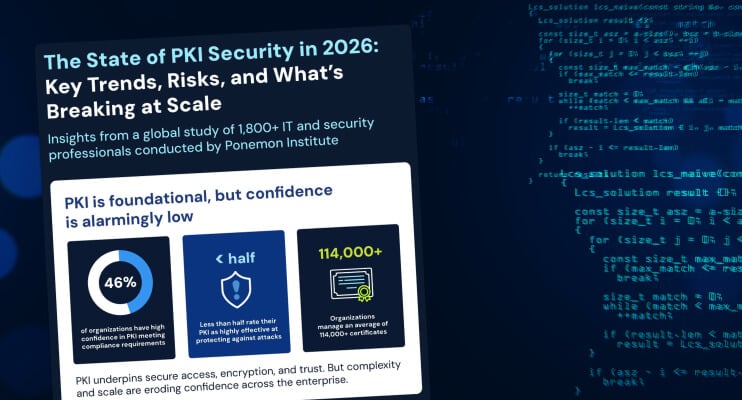
Your snapshot of actionable insights. Findings are based on a global Ponemon Institute survey of 1,833 IT and security practitioners across North America, EMEA, Asia-Pacific, and Latin America, representing diverse industries and enterprise environments.
Average number of internal certificates per organization
Typical number of full-time staff managing PKI
Say they have sufficient in-house PKI expertise
Cite legacy PKI cost and risk as the top barrier to security
Still rely on manual or ad-hoc PKI assessment methods
Have experienced outages due to expired or misconfigured certificates
The Real Cost and Risk of Legacy PKI
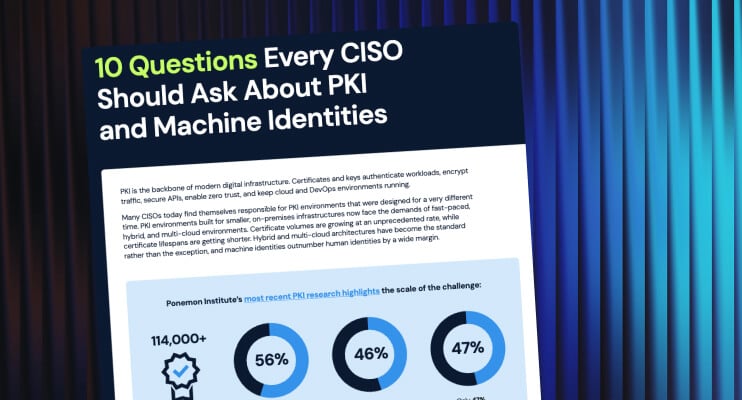
PKI failures rarely start as security incidents. They start as operational shortcuts, manual workarounds, and visibility gaps. These resources help you clearly articulate why legacy PKI is no longer sustainable from a cost, resilience, or risk perspective.

“PKI is critically important to ensuring trust, security, and privacy in digital communications. However, as shown in the research, organizations lack confidence in the ability of PKI to protect against security threats and keep up with their growing devices and workload demand. To increase PKI’s effectiveness, I believe more companies will be adopting AI to reduce operational burdens and have stronger security outcomes.”
Larry Ponemon, Chairman and Founder, Ponemon Institute
Why Legacy PKI Can’t Keep Up With Modern Environments
For many organizations, PKI problems aren’t caused by poor execution. They’re caused by outdated architecture. This section explains why legacy PKI models break down as certificate volumes grow, lifecycles shrink, and machine identities multiply.
“63% are turning to MSSPs to offset internal resource shortages.”
Ponemon Institute, Trends in PKI Security: A Global Study of Trends, Challenges & Business Impact, 2026
What Modern PKI Looks Like in Practice
Modern PKI is not just cloud-hosted; it’s automated, policy-driven, auditable, and designed for scale. These resources help teams assess market options, define decision criteria, and benchmark their approach against industry guidance.


From PKI Evaluation to Execution Without Disruption
Modernizing PKI is not just a technology decision. It’s an operational transition. These resources focus on what high-performing organizations do differently and how teams move from planning to production safely.
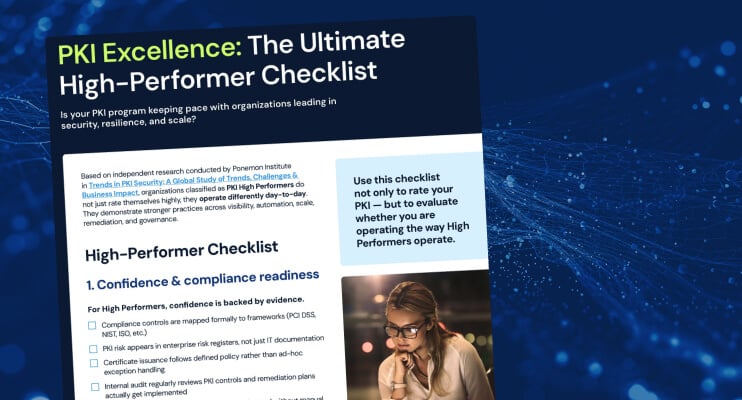

Automate to Modernize Internal PKI
Automation isn’t a future enhancement—it’s a prerequisite for securing machine-to-machine communications at scale. Legacy PKI built on manual issuance and onprem CAs can’t keep pace with growing machine identities or cryptographic change. CyberArk Zero Touch PKI delivers SaaS-based, policy-driven automation to secure machine identities across hybrid and cloud environments—reducing manual effort, outage risk, and misconfiguration while maintaining consistent, compliant security.
“For many organizations, PKI risks remain largely hidden and overlooked. As certificate volumes grow and certificate lifespans continue to shrink, the financial and operational impact of unmanaged PKI will escalate rapidly. Now is the time for organizations to automate and modernize their PKI to reduce operational burdens and improve their overall security posture.”
Kurt Sand, GM of Machine Identity Security, CyberArk
Ponemon Institute Trends in PKI Security
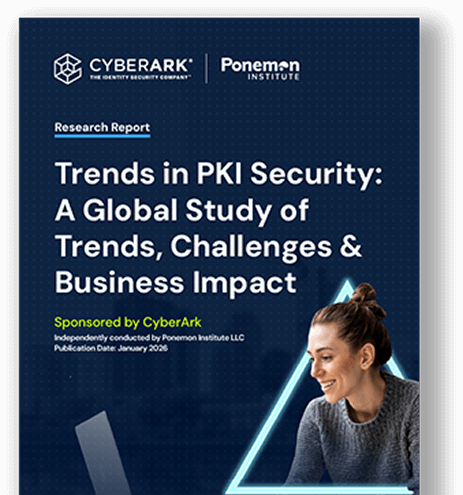
Public Key Infrastructure (PKI) has quietly become one of the most fragile and expensive layers of enterprise security. As certificate volumes surge and lifespans shrink, legacy PKI models struggle to keep up, driving outages, compliance gaps, and operational strain. This independent global study reveals how widespread the problem is and why PKI modernization is becoming unavoidable.
Based on insights from nearly 2,000 global IT and security practitioners, this Ponemon Institute research quantifies the business impact of PKI complexity and exposes the gap between perceived readiness and reality—helping leaders understand both the scale of risk and the path forward.
Key Findings at a Glance
Widespread PKI risk: 56% of organizations report unplanned outages caused by certificate expiration or configuration errors
Legacy PKI at scale: Organizations manage an average of 114,000+ certificates, yet fewer than half rate their PKI as highly effective
Manual burden: 53% still rely on manual processes to assess PKI security, increasing error and response time
Security fallout: 60% experienced weak cryptographic exploits and 58% report third-party CA compromise
High-performer advantage: Organizations with strong PKI confidence see fewer outages, better visibility, and lower operational burden
Download the full report to benchmark your PKI posture and identify the modernization priorities separating high performers from the rest.
Who Should Read This Report
- CISOs, CIOs, and security leaders accountable for risk, resilience, and compliance
- PKI, IAM, and machine identity owners managing certificate growth
- Security architects and infrastructure leaders supporting hybrid, cloud, and DevOps environments
- Governance, risk, and compliance teams preparing for audits, regulations, and shrinking certificate lifespans

